

The role played by the Yemeni Muslim preachers, known in Kerala as Sayyids or Thangals, in disrupting communal harmony in the Malabar region is a subject that deserves serious scholarly attention. There are many reasons to study in depth how these Yemeni missionaries turned Indian Muslims, especially those in South India, against Hindus and helped ignite waves of communal violence during 17th and 18th centuries. Such an inquiry would guide the present generation back to the harmonious era of Hindu–Muslim relations that prevailed in Kerala before the Yemeni domination of the region.
During the seventeenth and eighteenth centuries, Islamic missionaries arrived in large numbers from Yemen, a West Asian nation, at major port towns across India. To win the trust of local Muslims and avoid the natural resistance foreigners would otherwise face, they propagated the fabricated claim that they were descendants of Prophet Muhammad. As this narrative gained acceptance within the local Muslim community, these Yemenis rose to the position of religious authority and began promoting a more radical form of Islam across the land.
Why did widespread communal riots erupt across Malabar after the 1800s? It was during this period that the Mappila Muslims came under a new religious leadership. This Yemeni leadership undertook the task of educating ordinary Mappilas about the “virtues” of jihad. The hardline Islamic ideas introduced by the Yemenis were entirely unfamiliar to Kerala until then. Up to the time of the invasions by Hyder Ali and Tipu Sultan, Hindus and Muslims had lived in Malabar without major conflicts. But after that era, it was the Yemenis who carried out the ideological indoctrination of the Mappilas or Moplahs. These missionaries were chiefly responsible for infusing political Islam into Mappila identity.
The Yemenis Who Communalised Malabar
The celebrated era of Hindu–Muslim amity in Kerala, flourishing under various Hindu chieftains of Malabar, came to an end with the arrival of the Yemeni missionaries. What the Portuguese did to the native Christians in the 16th century, the Yemeni Islamists did to the Mappilas: de-Indianisation. Historical evidence shows that the Yemeni Thangals do not possess even a 200-year lineage in Kerala. Alavi, who arrived in Mamburam in the early 1800s, was the first to gain the title Mamburam Thangal. His son, Fazal Pookoya, became Kerala’s first prominent political Islamist. It was he who introduced and operationalised the ideas of Pan-Islamism, Political Islam, and jihad in Malabar. Over centuries, the region had evolved into a pluralistic society; the Yemeni group dismantled this indigenous religious fabric. The influence they exerted to inject communal hostility into the local Muslim psyche, preparing them for anti-Hindu violence, deserves detailed research. Similarly, the internal conflicts between the Mamburam and Kondotty Thangals and the disappearance of several Muslim sub-sects and traditions in Malabar also require deeper study.
More than the invasions of Hyder Ali or Tipu Sultan, it was the Mamburam Thangal who systematically destroyed Hindu–Muslim harmony, imposed Pan-Islamism on the Mappilas, and severed their ties with local traditions and other religions. During the Tipu-Hyder incursions, Malabar Hindus suffered at the hands of external religious zealots; during the Yemeni cultural domination, they turned local Muslims into instruments of jihad against local Hindus. Under the false aura of “prophetic lineage,” these Thangals enslaved the Mappila mind. Those who once fought foreign aggressors for the sake of homeland and shared regional identity were now turned against Hindus, persuaded that armed jihad was the true path of their faith. Historical documents and inquiry reports confirm this transformation. Records show Fazal Pookoya calling upon Muslims to massacre Hindus—labelled as kafirs—and blessing jihadists before sending them into battle. The Mamburam Thangals strictly prohibited Muslims from participating in Sufi practices or engaging respectfully in Hindu festivals. Within a short period, they dismantled a centuries-old model of interfaith coexistence. The Yemeni intervention is what deprived Malabar Muslims of an Islamic identity compatible with pluralistic living.
By the 1850s, Fazal Pookoya Thangal had become the central figure behind a series of uprisings. When the British army arrived to restore law and order, he turned against them. After a warrant was issued for his arrest, he fled to Arabia in 1852 and spent his remaining years under the protection of the Ottoman Caliphate in Turkey. From Turkey, he continued interfering in Malabar’s politics and fomenting unrest. Eventually, the British exiled the entire Mamburam family. Had they not, India might have faced not two but three Pakistans—East, West, and South—at the time of Partition. Much of their communal violence has been whitewashed into “freedom struggle history” by successive Left and Congress governments. But authentic historical records reveal the truth of Yemeni-inspired jihad in Malabar. This ideological conditioning also contributed to the Khilafat movement of 1921 erupting as a communal riot in Kerala. The Mappilas’ devotion to the Caliphate and their political orientation toward Turkey began with Fazal Pookoya Thangal.
The Thangals Who Opposed Hyderabad Annexation
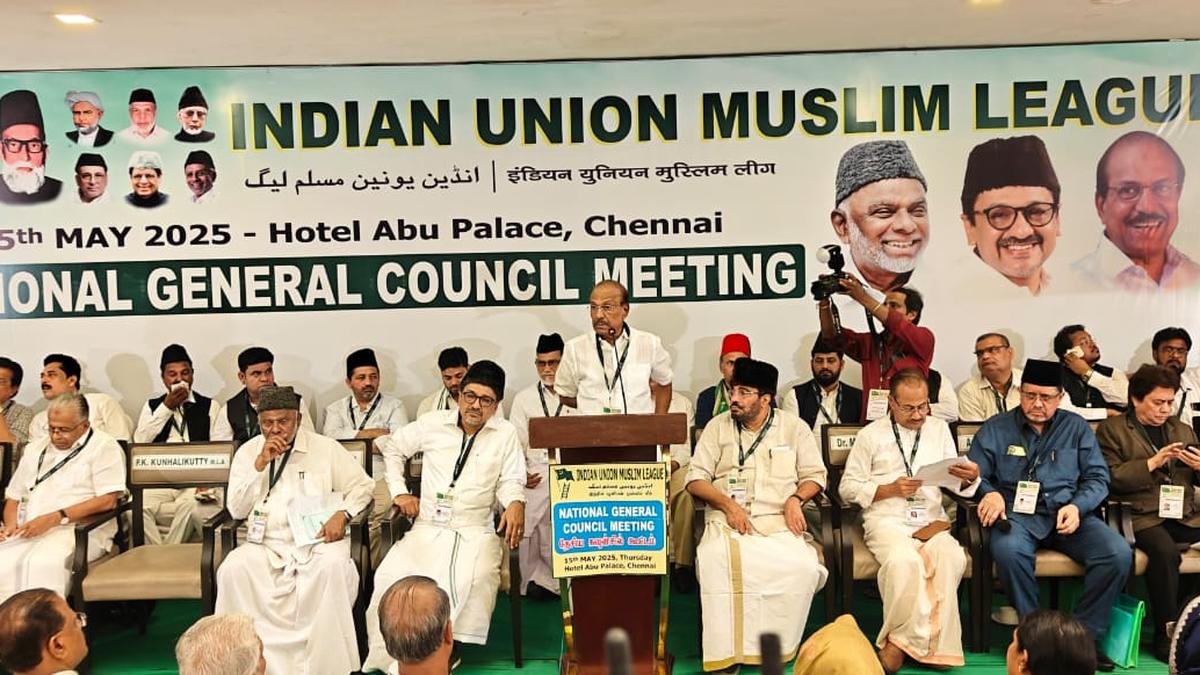
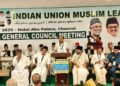
Who are the Panakkad Thangals, the dynastic leadership of the present-day Indian Union Muslim League? After the British exiled the original extremist Mamburam Thangals, they installed a compliant Yemeni family as a puppet religious leadership in Malabar to help control the Mappilas, since by then the community had come to revere Yemeni Sayyids as prophetic successors. This created the Panakkad Thangals, who were known for never opposing British interests.
Panakkad Pookoya Thangal, father of Shihab Ali Thangal and Hyder Ali Thangal-both of them were IUML leaders, was an early leader of the Malabar Muslim League. After the genocidal Mappila attack on Hindus in 1921, and with Arya Samaj influence rising in the region, Pookoya Thangal became the leader of Samastha Kerala Jam’iyyathul Ulama, founded with an explicit disclaimer: that the 1921 violence resulted from Salafi instigation, and the Sunni clergy (including Panakkad family) had no role. They insisted the 1921 uprising was neither part of the freedom struggle nor a peasant movement, but a communal riot. They washed their hands of Variyankunnath Haji and Ali, blaming Salafis for misleading them. As loyal British collaborators, the Panakkad Thangals have no history of arrest or involvement in the freedom struggle. Their pro-British stance earned them high positions within the Muslim League, created by the British to destabilise India’s political unity.
Pookoya Thangal was arrested and jailed, not during British rule, but in 1948, a year after Partition, when independent India under Nehru and Patel reclaimed Hyderabad from pro-Pakistan forces. For vehemently opposing the military action, Thangal was arrested for . This is the Kerala Muslim League’s only “connection” to the freedom struggle: but it was against the Independent India, not against the colonial rule. During Partition, the same Muslim League spread the slogan “Pattonaykku kathi vangi kuththi vanguvum Pakistan” (“We will buy a knife for ten annas and kill you all to create Pakistan”) in Malabar, inciting violence. Nehru was the one who called IUML a head horse. When Nehru later visited Kerala, the Muslim League called him a “Hindu communalist.” Kerala’s Muslim League alone carries the legacy of branding India’s first Prime Minister a Hindu extremist.
Before India became a republic, the Panakkad Yemenis secured their political space by betraying both their fellow 1921 jihadis, Congress, freedom movement and Nehru. Yet a century later, they claim solidarity with Congress, Nehru, and the independence struggle, an astonishing feat of historical revisionism.
The Muslim League That Divided India and Today’s League Are One and the Same
Are the Muslim League that partitioned India and the present-day Indian Union Muslim League (IUML) different? Defenders of IUML, led by Yemeni Sayyids, claim it is a secular party born in independent India, with no ties to the All India Muslim League or Muhammad Ali Jinnah. But the reality says otherwise. The IUML is merely a franchise of Jinnah’s League. India’s Muslim League branch was formed according to Jinnah’s decision at the 1948 Karachi conference in Pakistan.
When Jinnah called for Indian Muslim League members to reorganise the party, no Muslim leaders from the northern states of India stepped forward. The reason was simple: the strong anti-League sentiment prevailed in the northern states after Partition. And, by then, majority of the prominent AIML leaders in the north Indian states had already migrated to Pakistan. Thus Jinnah appointed Muhammad Ismail, an Islamist from Tamil Nadu, to establish IUML in India. He convened a conference in Madras, but leaders from the northern states, including the erstwhile League’s stronghold Uttar Pradesh, stayed away. Though 147 leaders were invited, only 30 attended, mostly from Madras (including Malabar of present Kerala), Mysore, and a few from Bombay. The South Indian leadership of the old AIML formed the new IUML, and AIML’s assets continued with it. Chandrika, for example, today IUML’s newspaper, was founded in 1932 by AIML leaders and continued after Partition as the League’s mouthpiece.
Nota Bene: Some Yemeni Thangals also reside in Lakshadweep, where they were classified as a Scheduled Tribe by successive Congress governments, placing a foreign-origin group (with barely 200 years of history in India) into a category meant exclusively for the upliftment of India’s traditional Vanavasi population. It is worth noting that when genuine Vanavasis continue to suffer poverty, undeserving groups like Yemeni Thangals continue to enjoy constitutional privileges which are not meant for them.




Discussion about this post