

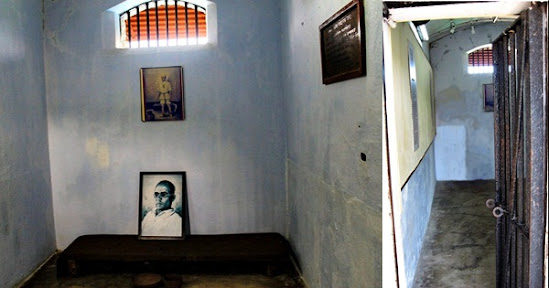
In his memoir, My Transportation for Life, the great freedom fighter, nationalist, and the real national hero, Vinayak Damodar Savarkar, revered as Veer Savarkar, recounts myriad friendships and interactions he formed during his years of rigorous imprisonment in the Andaman Cellular Jail. Among these rare and remarkable bonds, one that particularly stands out is his friendship with a “Malayali friend” he refers to as Mr. Nair. A clerk at the jail, Nair’s unwavering courage and loyalty certainly left an indelible mark on Savarkar’s mind.
Veer Savarkar’s memoir offers an intriguing insight into the tense and oppressive atmosphere that pervaded the Andaman Islands, where revolutionaries endured extreme hardships under constant surveillance. Despite this repression, Savarkar cultivated relationships that transcended caste, language, and politics, forging deep connections even with fellow inmates and some officers. His friendship with Mr. Nair was one such bond—one that endured even in the face of threats and intimidation from British authorities. Nair, undeterred by the risks, displayed extraordinary resilience and integrity in supporting and protecting Savarkar.
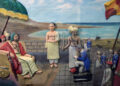
Savarkar recounts a particular episode linked to the 1912 assassination attempt on Lord Hardinge, the then British Viceroy of India, during the Coronation Durbar in Delhi. The attack, part of what came to be known as the Delhi Conspiracy Case (or the Delhi-Lahore Conspiracy), was orchestrated by members of the Anushilan Samiti, with Basanta Kumar Biswas executing the bombing. As the Viceroy sat atop an elephant in the grand procession, Biswas hurled a homemade bomb at him. Although Hardinge survived with injuries to his back and shoulders, his attendant, who carried the parasol behind him, was killed. The attack sent shockwaves through the British administration and intensified their scrutiny of Indian revolutionaries.
(In connection with the case, on October 5, 1914, Lala Hanumant Sahai was sentenced to life imprisonment in the Andaman Islands, while four others received death sentences. Basanta Kumar Biswas was executed on May 11, 1915, at the Ambala Central Jail, becoming one of the youngest revolutionaries to be hanged during India’s struggle for independence—he was barely twenty years old.)
Savarkar’s narration of the incident reveals the heightened paranoia among British officers, who feared that revolutionaries in the Andaman Cellular Jail had inside knowledge of the conspiracy. Meanwhile, Savarkar himself was keenly curious about the details of the attack and sought to verify the information that had reached him through unofficial sources. Cleverly, he tested a prison officer’s awareness the following morning by casually inquiring, “Has the Coronation Durbar Ceremony at Delhi passed off all right?” The officer, oblivious to the incident, smugly dismissed the question, boasting that the revolutionaries must have been awed by the grandeur of the British Empire. Savarkar, knowing full well that news of the bombing had already spread within the prison, merely smiled at the officer’s arrogance.
As rumors of the attack circulated among the inmates, British officials became increasingly suspicious of how the information had reached them. Mr. Barrie, a notorious British officer and Savarkar’s bete noire, grew particularly paranoid and fixated on finding the informant. His suspicion fell upon Mr. Nair, who was present in the office at the time. For two days, Barrie subjected Nair to relentless interrogation, even threatening to cane him unless he revealed the source of the information. Yet, Nair remained resolute. When confronted, he defiantly stood his ground, inviting Barrie to punish him if he so wished, but he refused to betray Savarkar and other prisoners.
Despite Barrie’s persistence, no evidence was found against Nair. The Superintendent ultimately let him off with a stern warning to sever all ties with Savarkar. However, Nair remained steadfast in his friendship, disregarding the threats and continuing to stand by Savarkar. Their bond only deepened over time, and in Savarkar’s final year of imprisonment, the authorities themselves appointed them to work together.
Notably, Savarkar never disclosed whether Nair had indeed been the source of the information. In his memoir, he attributes it simply to “sources,” leaving the true informant’s identity shrouded in mystery. It remains an open question whether Nair was responsible, or whether the news had reached Savarkar through other channels.
Unfortunately, little else is known about Mr. Nair, not even his full name, his origins in Kerala, or any details of his family. Yet, his story, as told through Savarkar’s memoir, is a testament to the unbreakable spirit of nationalism that thrived even within the walls of the Andaman Cellular Jail. His steadfast loyalty, unyielding courage, and unwavering friendship embody the resilience and solidarity that defined India’s revolutionary movement. The bond between Savarkar and Nair is not just a tale of personal camaraderie but a shining example of how the fight for freedom transcended barriers of region, language, and background, uniting brave hearts in a common cause.
Savarkar about his Malayali friend in Andamans as written in ‘My Transportation for Life’
“In the viceregal procession to the Coronation Durbar in Delhi in 1912, a bomb was thrown at Lord Hardinge, the then Viceroy of India, somewhere in the vicinity of the Chandni Chowk, when a stampede ensued, and, before the procession could move onwards, the elephant with its Howdah in which Lord Hardinge was seated had to be taken out of it. Except for the shock of the incident, the Viceroy had suffered no material injury. This was reported as confidential news to the Chief Commissioner of the Andamans, but we got it through our sources right at the time that it was flashed to the Chief Commissioner. Depending upon it and in order to verify it, for it was likely to be full of discrepancies as it came to us, I asked an officer who came to the prison next morning on his usual round, “Has the coronation Durbar Ceremony at Delhi passed off all right?” As he had no news of it till that time, he answered, “Yes, of course; you revolutionaries must certainly have been staggered to witness this formidable display of our Imperial prestige.” I simply laughed to myself at this expression of arrogance, and he was touched to the quick by my indifference. He returned to the officer and Mr. Barrie put into his hands the special wire he had received from Delhi. He, instantly, flared up in abuse, and said, “Surely enough, these fellows must have some inkling of it.” Mr. Barrie was astounded at the remark. He started a secret enquiry and found that the news had been the talk of the entire prison. He created a scene in his office.”
“One of my young friends, by name Mr. Nair, was in the office at the time, for he had to attend it as a clerk. Mr. Barrie cast his suspicion upon poor Mr. Nair. He pestered him for two days after, to tell him who had brought the news to me. He threatened him with caning. The young man was a spirited individual. With pen in hand he stood up and invited Mr. Barrie to cane him there and then. Mr. Nair was taken to the Superintendent who found no proof against him to confirm Mr. Barrie’s suspicion. He was punctual and clever in his work and pet, on that account, of the Superintendent. The Superintendent let him off with a warning that he was to keep no connection with me; and that if he was found doing so, the Superintendent would order caning him as punishment for the offence. This young man continued his association with me inspite of the threat, and we were intimate with each other till my release from that jail. In my final year, the officers themselves appointed him and me to work together. That is all that I have to say of him for the present.”






Discussion about this post